First Published in Kansas Reflector
Each year on May 1 our nation celebrates Law Day. It is a time reserved to reflect on a defining trait of our nation: we are governed by laws, not by individuals. In fact, since 1787 the Preamble to our Constitution has reminded us that a principal purpose of our founders was to “establish Justice.”
As a former chief justice of the Kansas Supreme Court, for me Law Day obviously has great meaning. But it is additionally significant for me because it was established by my fellow Kansan, President Dwight D. Eisenhower, whose hometown of Abilene is only 23 miles from my own.
Eisenhower was no lawyer. But as an Army general, he had seen the lawlessness and resultant horrors of World War II. So, in 1958 he had a well-founded basis to proclaim, “If civilization is to survive, it must choose the rule of law.” At a time of global tension, he chose to highlight what distinguished our nation: a system grounded in law, individual rights, and constitutional order — not the unchecked exercise of raw power.
And Eisenhower practiced what he proclaimed. Mere months before his proclamation, after seeing open defiance of the U. S. Supreme Court’s decision requiring desegregation of public schools, he ordered Army units to Arkansas to ensure compliance with the Court’s order.
In Eisenhower’s proclamation establishing May 1 as Law Day, he called it a time for us to “vigilantly guard the great heritage of liberty, justice, and equality under law.” This equality is at the heart of the rule of law: no one is above the law, and it is applied fairly and consistently. Essential to this tenet is an independent judiciary. Indeed, one reason the 13 colonies declared their independence from Great Britain in 1776 was because the King “has obstructed the Administration of Justice, by refusing his Assent to Laws for establishing Judiciary Powers.”
Our nation’s founders later secured the independent judiciary’s rightful place in the system of government they created. We know that members of the executive and legislative branches seek election by promising to pursue policies favored by their various constituents. But judges, as members of the judicial branch, have only one constituent: the rule of law. Their obligation is to decide cases based on the facts before them and the applicable law.
During my years as chief justice of the Kansas Supreme Court, I witnessed firsthand how much the legitimacy of our courts depends on public trust. People must believe that their cases will be heard impartially, that the rules will be applied consistently, that the judges will be bound by the law and will act independently of personal preference, outside influence, and external pressure. This independence stands as an essential safeguard for the people. It allows our courts to protect individual rights, ensure equal treatment, and maintain the balance our founders intended among our government’s three branches.
As we observe Law Day on May 1, we must remember that understanding how our courts function, and why judicial independence matters, are essential to preserving our system that is based on the rule of law and is fair, stable, and worthy of public trust. We must also remember the accompanying message from my fellow Kansan. President Eisenhower expressly called upon “the people of this Nation” (not just its lawyers and judges) to vigilantly guard and strengthen that system.
Will you vigilantly guard and strengthen? The well-being of our nation depends on it.
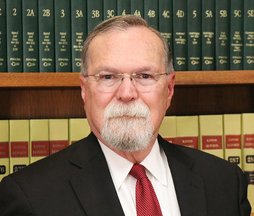
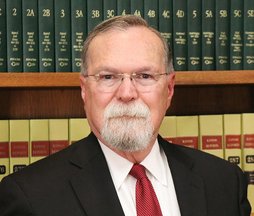
Lawton Nuss served as Chief Justice of the Kansas Supreme Court. He is a member of “Keep Our Republic’s Alliance of Former Chief Justices,” which advocates nationally in support of the rule of law.